
)


)
Every operator I speak to has already accepted the compliance reality. The UK Gambling Commission's (UKGC) £150 financial risk check threshold is live. Affordability assessments are up and running. But far fewer have worked out how much their current implementation is costing them.
Run affordability as a bolt-on process and you lose revenue at the compliance gate. Players who encounter document upload requests, manual review steps, and friction-heavy journeys don't all complete the check. TrueLayer's own research found that 46% of players drop off when asked to submit verification documents, and in iGaming specifically, 58% will abandon a process after just five minutes. Some never return. That revenue doesn't come back.
The checks themselves don't cause that loss. How you run them does. Every operator facing this right now has the same choice: build affordability into the infrastructure you already run, or keep running it the same way and keep absorbing the cost.
The revenue cost of bolt-on compliance
Every player who reaches a compliance gate and doesn't come through is a player you've lost. Multiply that across a meaningful share of your active base and you're looking at a significant, recurring revenue gap.
A standalone affordability process creates exactly this outcome. Document collection requests drive abandonment. Players who encounter an unexpected bank statement upload mid-journey don't all return.
And traditional affordability approaches typically rely on monthly credit bureau snapshots, which means operators make compliance decisions on data that can be weeks old. In turn, operators flag players unnecessarily, adding more friction and driving further drop-off.
Most operators measure the cost of affordability compliance in what they spend on it. They should be measuring what they lose because of it.
What real-time data changes
How do you run affordability checks without the revenue cost?
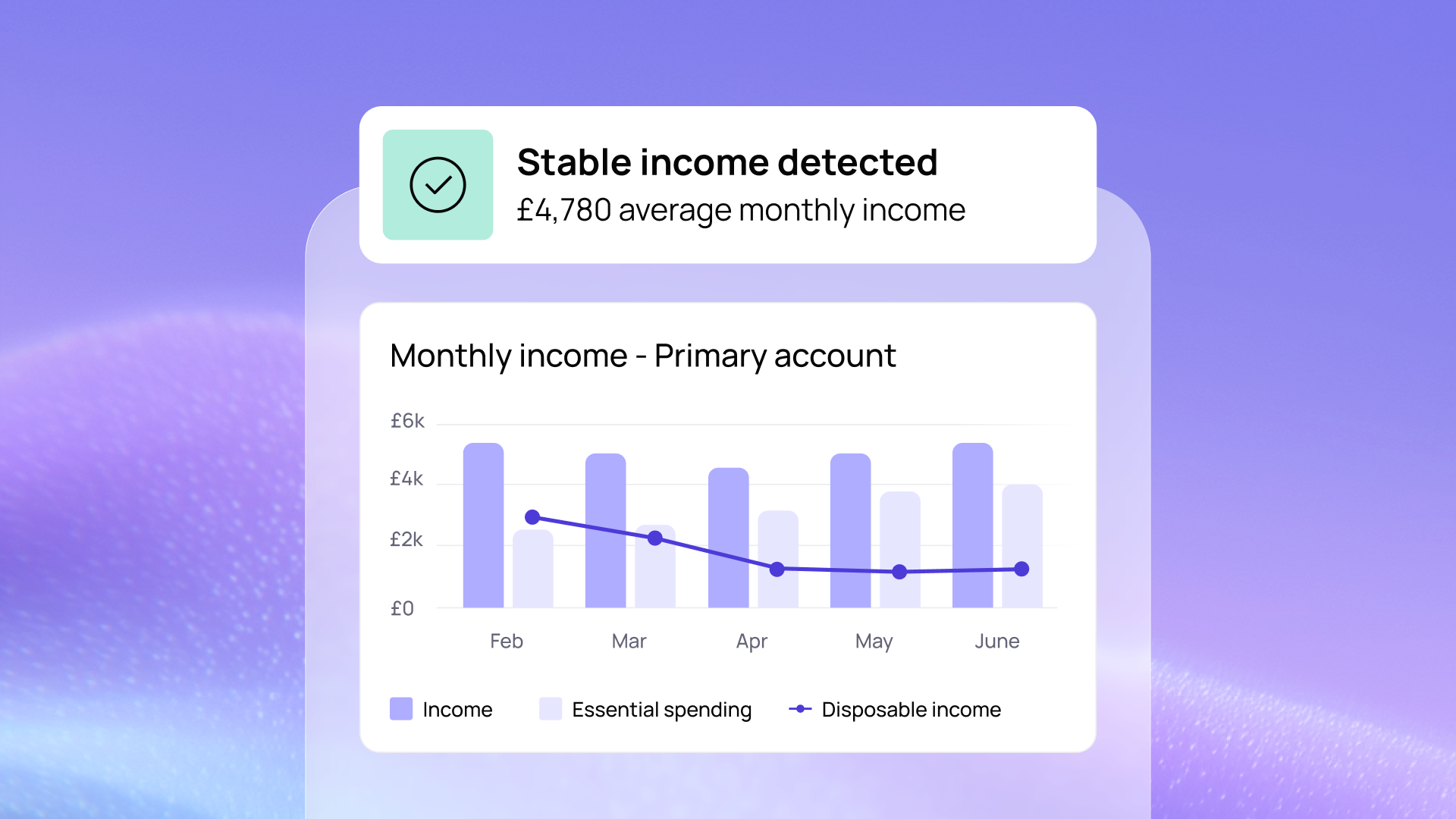
Open banking takes a different approach. Rather than requesting documents or relying on historic credit data, operators can access real-time, player-consented transaction data directly from the player's bank account.
Rather than requesting documents or relying on historic credit data, operators can access real-time, player-consented transaction data directly from the player's bank account. That data is current, bank-verified, and specific to the individual player, rather than a modelled estimate from last month. Fewer players are flagged unnecessarily. More complete the check. Less revenue is lost to drop-off.
Your compliance team gets more defensible decisions and a stronger audit trail. Your responsible gambling team gets richer signals for identifying genuine financial vulnerability, not just players who trip a credit bureau threshold.
Affordability processes built on real-time, evidence-based signals are also more proportionate and better placed to withstand regulatory scrutiny than those relying on static credit files.
Why you don't need a separate affordability provider
Operators running open banking for deposits and payouts don't need to add another vendor for affordability. Our solution runs on the same infrastructure that already handles your deposits, payouts and onboarding: the TrueLayer iGaming stack.
This is the single infrastructure layer covering onboarding, payments, affordability and payouts, built to work as one. One commercial relationship. One integration. One data consent journey covering multiple compliance and payment functions at once.
Procurement pressure to reduce vendor complexity is real, and every operator I work with feels it. Accessing affordability within infrastructure you already have in production is a very different commercial conversation to evaluating and onboarding a standalone provider.
When affordability sits inside the payment flow, players connect their bank account once, in a journey they already recognise. No separate account creation, no redirected document upload. Higher completion rates at the compliance gate. More players successfully checked. Less revenue lost to drop-off.
Why the timing matters
The UKGC's financial risk check requirements are live, operators are actively evaluating solutions, and the market is moving. Operators who build their affordability processes now, on digital, evidence-based, and risk-proportionate foundations, are building something that works at scale. Those who wait face the same obligations with less time to implement well.
Affordability isn't going away. Whatever the industry debates about proportionality, operators will be running these checks for the foreseeable future.
Running them well is optional.
If you're building or rebuilding your affordability infrastructure, the question is whether to solve it in isolation or as part of the payments infrastructure you already run.
Open banking delivers the data quality that legacy credit infrastructure can't: real-time, bank-verified, specific to the individual player. Monthly credit bureau snapshots are a dated approach to a challenge that demands current data.
The TrueLayer iGaming stack brings payments, payouts, onboarding and affordability together under one infrastructure layer. One commercial relationship. Less operational complexity. Fewer data handoffs and vendor negotiations when something breaks. And a compliance process that protects your players and your revenue rather than working against both.
)
Italy's CDP Venture Capital invests in TrueLayer as Europe builds its
)

TrueLayer and SumUp partner to simplify account top-ups across Europe
)
